
Reykjavík is the world’s northernmost capital and home to two-thirds of Iceland’s entire population — which still only amounts to around 130,000 people, giving it the scale of a large town rather than a conventional city. It sits on a peninsula on the southwest coast of Iceland, sheltered from the North Atlantic by the Reykjanes Peninsula to the south and the Esja mountain to the north. The city is compact and walkable: the old harbour, the Laugavegur shopping street, Hallgrímskirkja church and the Harpa concert hall on the waterfront are all within 20 minutes of each other on foot. The Sun Voyager sculpture on the harbourfront and Rainbow Street in the old town are the most photographed corners.
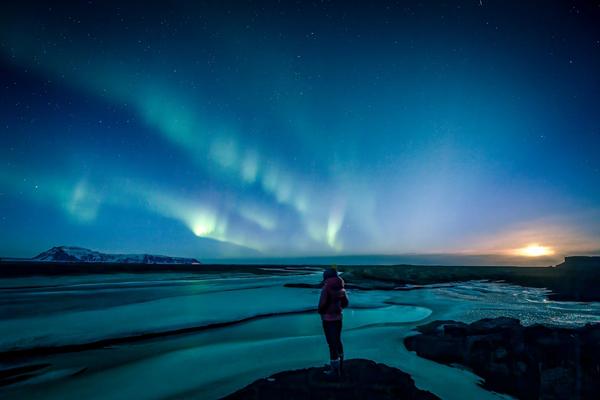
The city is primarily a base for the surrounding geology rather than a destination in itself. Keflavik International Airport, 50 kilometres southwest, is the entry point; the Blue Lagoon geothermal spa at Grindavík is 20 minutes from the airport and commonly visited on arrival or departure. The Golden Circle — Þingvellir National Park, the Geysir hot spring area and Gullfoss waterfall — is a 300-kilometre loop accessible as a day trip from the city. The South Shore to Seljalandsfoss and Skógafoss is another full day east along the coast. Aurora hunting excursions run from the city between late September and April, when the nights are dark enough.
Halal dining in Reykjavík is limited but present — a small number of halal-certified restaurants operate in the city centre, and the supermarkets stock halal meat in the larger branches. The city is expensive by any standard; meals, transport and attractions are all priced at Scandinavian levels. Iceland’s unique natural conditions mean the experience differs significantly by season: June to August delivers the midnight sun (24 hours of daylight at the peak), while October to March offers the best aurora conditions and the dramatic contrast of short, dark days against snow-covered lava fields. Both are genuinely worth experiencing for different reasons.
Best time to visit
June to August for midnight sun; October to March for Northern Lights