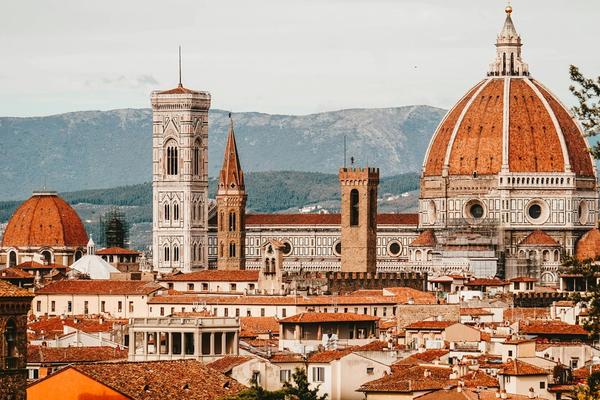

Florence is where the Renaissance happened — not as a metaphor, but as a specific consequence of specific patronage. The Medici family, banking merchants who controlled Florentine politics for most of the 15th and 16th centuries, spent their wealth commissioning the artists and architects who rebuilt the visual language of Western Europe. Brunelleschi’s dome over Santa Maria del Fiore, completed in 1436, was the largest dome built since the Pantheon in Rome and was constructed without the wooden centring that contemporary engineering considered mandatory. Ghiberti’s bronze doors for the Baptistery, completed in 1452, took 27 years to make. Botticelli painted the Birth of Venus and Primavera for Lorenzo de’ Medici’s private collection. The results of all of this are still, mostly, where they were left.
The city is compact enough to cover its main sites on foot in two days. The Uffizi Gallery, which houses the most significant collection of Italian Renaissance painting in the world, is on the south side of Piazza della Signoria — advance booking is essential in peak season. Piazza della Signoria itself is the civic centre, with the Palazzo Vecchio and the Loggia dei Lanzi open-air sculpture hall. Ponte Vecchio, five minutes south, is the medieval bridge over the Arno lined with goldsmiths’ shops — the only bridge in Florence not destroyed by the retreating German army in 1944. Piazzale Michelangelo, a 20-minute walk uphill from the south bank, gives the best panoramic view of the city and Brunelleschi’s dome against the Tuscan hills.
Halal dining in Florence is more limited than in Rome or Milan but available, particularly in the area around the central market and the Piazza della Repubblica. The San Lorenzo Market outside the central market building sells leather goods, clothing and souvenirs; the Pierotucci leather workshop near Santa Croce does hand-crafted work on site. Florence is best visited April to June or September to October — July and August are extremely hot and very crowded. The Uffizi and the Accademia (which holds the original Michelangelo David) both require timed tickets booked in advance, particularly in summer.
Best time to visit
April to June, September to October