
Rotorua sits directly on the Taupo Volcanic Zone, the most geothermally active region in New Zealand. The hydrothermal field below the city produces mud pools, silica terraces, and steam vents at the surface — not confined to the parks, but visible in Kuirau Park in the city centre and rising from drains in residential streets. The sulphur smell on arrival is part of the experience; visitors stop noticing it within a few hours.
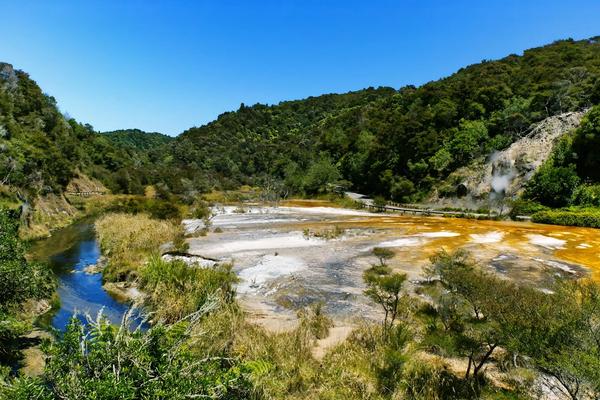
The two geothermal parks most worth visiting are Wai-O-Tapu Thermal Wonderland and Waimangu Volcanic Valley. Wai-O-Tapu, 27 kilometres south of the city, has the Champagne Pool — a 65-metre-wide hot spring at 74°C whose orange rim comes from antimony and arsenic deposits — and the Lady Knox Geyser, which erupts daily at 10:15am. Waimangu was created by the 1886 eruption of Mt Tarawera and is one of the youngest geothermal systems on Earth. Both parks drive themselves; parking at each entrance is straightforward.
Rotorua is also the most accessible place in New Zealand to engage with Māori culture in a meaningful way. Te Puia on the Whakarewarewa geothermal field offers both a daytime guided experience through the Arts and Crafts Institute — where master carvers and weavers work in a living apprenticeship system — and the Te Po evening programme with a hāngī-style dinner and kapa haka performance on the geyser terrace. Halal dining options are available in the city centre; confirm with your accommodation on arrival for current recommendations.
Best time to visit
Year-round destination. Summer (December to February) is warm and busy. Winter adds a different character — steam from the thermal areas is more visible in cold air, and the Redwoods Nightlights operates year-round.